


Your Professional Organic Intermediate Manufacturer!
Located in Xiasha Economic Development Park of Hangzhou city (capital of Zhejiang province in the southeast coastal region of China), Hangzhou Dingyan Chem Co.,Ltd is a modern private enterprise; The company was founded in 2013 and has more than ten years of experience in this industry. we are mainly engaged in the development, trade and independent import and export business of hi-tech products such as pharmaceutical materials (APIs), pharmaceutical intermediates, fine chemicals and biochemical reagents, etc.
-
![2-Aminopyridine CAS 504-29-0]() 2-Aminopyridine CAS 504-29-0Product Name: 2-AminopyridineCAS No.: 504-29-0Molecular Formula: C5H6N2Molecular Weight: 94.11Melting Point: 59 °CBoiling Point: 204-210 °C (lit.)Bulk Density: 600 kg/m³Density: 1.0308read more
2-Aminopyridine CAS 504-29-0Product Name: 2-AminopyridineCAS No.: 504-29-0Molecular Formula: C5H6N2Molecular Weight: 94.11Melting Point: 59 °CBoiling Point: 204-210 °C (lit.)Bulk Density: 600 kg/m³Density: 1.0308read more -
![1,2-Diaminocyclohexane CAS 694-83-7]() 1,2-Diaminocyclohexane CAS 694-83-7Product Name: 1,2-DiaminocyclohexaneCAS No.: 694-83-7Molecular Formula: C6H14N2Molecular Weight: 114.19Melting Point: 41-45 °CBoiling Point: 92-93 °C (18 mm Hg, lit.)Density: 0.931 g/mL at 25 °Cread more
1,2-Diaminocyclohexane CAS 694-83-7Product Name: 1,2-DiaminocyclohexaneCAS No.: 694-83-7Molecular Formula: C6H14N2Molecular Weight: 114.19Melting Point: 41-45 °CBoiling Point: 92-93 °C (18 mm Hg, lit.)Density: 0.931 g/mL at 25 °Cread more -
![N,N-Diisopropylethylamine CAS 7087-68-5]() N,N-Diisopropylethylamine CAS 7087-68-5Product Name: N,N-DiisopropylethylamineCAS No.: 7087-68-5Molecular Formula: C8H19NMolecular Weight: 129.24Melting Point: Boiling Point: 127 °C (lit.)Density: 0.742 g/mL at 25 °C (lit.)Vapor Pressure:read more
N,N-Diisopropylethylamine CAS 7087-68-5Product Name: N,N-DiisopropylethylamineCAS No.: 7087-68-5Molecular Formula: C8H19NMolecular Weight: 129.24Melting Point: Boiling Point: 127 °C (lit.)Density: 0.742 g/mL at 25 °C (lit.)Vapor Pressure:read more -
![2-Methoxybenzaldehyde CAS 135-02-4]() 2-Methoxybenzaldehyde CAS 135-02-4Product Name: 2-Methoxybenzaldehyde CAS No.: 135-02-4Molecular Formula: C8H8O2Molecular Weight: 136.15Melting Point: 34-40 °C (lit.)Boiling Point: 238 °C (lit.)Density: 1.127 g/mL at 25 °Cread more
2-Methoxybenzaldehyde CAS 135-02-4Product Name: 2-Methoxybenzaldehyde CAS No.: 135-02-4Molecular Formula: C8H8O2Molecular Weight: 136.15Melting Point: 34-40 °C (lit.)Boiling Point: 238 °C (lit.)Density: 1.127 g/mL at 25 °Cread more -
![4,4'-Bipyridine CAS 553-26-4]() 4,4'-Bipyridine CAS 553-26-4Product Name: 4,4'-BipyridineCAS No.: 553-26-4Molecular Formula: C10H8N2Molecular Weight: 156.18Melting Point: 109-112 °C (lit.)Boiling Point: 305 °C (lit.)Density: 1.2814 (rough estimate)Refractiveread more
4,4'-Bipyridine CAS 553-26-4Product Name: 4,4'-BipyridineCAS No.: 553-26-4Molecular Formula: C10H8N2Molecular Weight: 156.18Melting Point: 109-112 °C (lit.)Boiling Point: 305 °C (lit.)Density: 1.2814 (rough estimate)Refractiveread more -
![Hydroxylamine Hydrochloride CAS 5470-11-1]() Hydroxylamine Hydrochloride CAS 5470-11-1Product Name: Hydroxylamine hydrochlorideCAS No.: 5470-11-1Molecular Formula: NH₂OH·HClMolecular Weight: 69.49Melting Point: 155-157 °C (dec.)(lit.)Density: 1.67 g/mL at 25 °C (lit.)Bulk Density: 900read more
Hydroxylamine Hydrochloride CAS 5470-11-1Product Name: Hydroxylamine hydrochlorideCAS No.: 5470-11-1Molecular Formula: NH₂OH·HClMolecular Weight: 69.49Melting Point: 155-157 °C (dec.)(lit.)Density: 1.67 g/mL at 25 °C (lit.)Bulk Density: 900read more -
![Ethyl 6,8-dichlorooctanoate CAS 1070-64-0]() Ethyl 6,8-dichlorooctanoate CAS 1070-64-0Product Name: Ethyl 6,8-dichlorooctanoateCAS No.: 1070-64-0Molecular Formula: C10H18Cl2O2Molecular Weight: 241.15Boiling Point: 109 °C (Press: 0.7 Torr)Density: 1.107 g/mL at 25 °C (lit.)Refractiveread more
Ethyl 6,8-dichlorooctanoate CAS 1070-64-0Product Name: Ethyl 6,8-dichlorooctanoateCAS No.: 1070-64-0Molecular Formula: C10H18Cl2O2Molecular Weight: 241.15Boiling Point: 109 °C (Press: 0.7 Torr)Density: 1.107 g/mL at 25 °C (lit.)Refractiveread more -
![1-Methylpiperazine CAS 109-01-3]() 1-Methylpiperazine CAS 109-01-3Product Name: 1-MethylpiperazineCAS No.: 109-01-3Molecular Formula: C5H12N2Molecular Weight: 100.16Melting Point: -6 °CBoiling Point: 138 °C (lit.)Density: 0.903 g/mL at 25 °C (lit.)Vapor Density:read more
1-Methylpiperazine CAS 109-01-3Product Name: 1-MethylpiperazineCAS No.: 109-01-3Molecular Formula: C5H12N2Molecular Weight: 100.16Melting Point: -6 °CBoiling Point: 138 °C (lit.)Density: 0.903 g/mL at 25 °C (lit.)Vapor Density:read more -
![4-Dimethylaminopyridine CAS 1122-58-3]() 4-Dimethylaminopyridine CAS 1122-58-3Product Name: 4-DimethylaminopyridineCAS No.: 1122-58-3Molecular Formula: C7H10N2Molecular Weight: 122.17Melting Point: 112 °CBoiling Point: 162 °CBulk Density: 520 kg/m³Density: 0.906 g/mL at 25read more
4-Dimethylaminopyridine CAS 1122-58-3Product Name: 4-DimethylaminopyridineCAS No.: 1122-58-3Molecular Formula: C7H10N2Molecular Weight: 122.17Melting Point: 112 °CBoiling Point: 162 °CBulk Density: 520 kg/m³Density: 0.906 g/mL at 25read more -
![Sodium Salicylate CAS 54-21-7]() Sodium Salicylate CAS 54-21-7Product Name: Sodium salicylateCAS No.: 54-21-7Molecular Formula: C7H5NaO3Molecular Weight: 160.1Melting Point: >300 °C (lit.)Boiling Point: 237 °CBulk Density: 320 kg/m³Density: 0.32 g/cm³ (20read more
Sodium Salicylate CAS 54-21-7Product Name: Sodium salicylateCAS No.: 54-21-7Molecular Formula: C7H5NaO3Molecular Weight: 160.1Melting Point: >300 °C (lit.)Boiling Point: 237 °CBulk Density: 320 kg/m³Density: 0.32 g/cm³ (20read more -
![2-Nitrobenzaldehyde CAS 552-89-6]() 2-Nitrobenzaldehyde CAS 552-89-6Product Name: 2-NitrobenzaldehydeCAS No.: 552-89-6Molecular Formula: C7H5NO3Molecular Weight: 151.12Melting Point: 42-44 °C (lit.)Boiling Point: 153 °C 23 mm Hg (lit.)Bulk Density: 350 kg/m³Density:read more
2-Nitrobenzaldehyde CAS 552-89-6Product Name: 2-NitrobenzaldehydeCAS No.: 552-89-6Molecular Formula: C7H5NO3Molecular Weight: 151.12Melting Point: 42-44 °C (lit.)Boiling Point: 153 °C 23 mm Hg (lit.)Bulk Density: 350 kg/m³Density:read more -
![Trichloroacetonitrile 545-06-2]() Trichloroacetonitrile 545-06-2Appearance:Colorless transparent liquid. Assay≥99.5%. Sole impurity≤0.5%. Acidity ≤0.4%Moisture≤0.4read more
Trichloroacetonitrile 545-06-2Appearance:Colorless transparent liquid. Assay≥99.5%. Sole impurity≤0.5%. Acidity ≤0.4%Moisture≤0.4read more


Why Choose Us
Rich Experience
The company was founded in 2013 and has more than ten years of experience in this industry.
High Quality
Our products are manufactured or executed to very high standards, using the finest materials and manufacturing processes.
Research And Development
Insisting on the development path of "scientific and technological innovation" since our foundation, dingyan-chemical has laid great stresses on the research and development of scientific and technological innovation.
Production Market
Dingyan's products are well sold in more than 60 countries and regions in North America, Western Europe, Southeast Asia, Central and South America, and then established long-term and steady relations of cooperation with many pharmaceutical enterprises in Europe, USA, Greece, Germany, South Korea and India, etc.

Flexibility and Versatility: Organic intermediates can be used to carry or transfer chemical groups, allowing for the construction of complex molecules from simpler starting materials. They can be tailored to specific needs, with different functional groups and structures being introduced. This flexibility makes them suitable for a wide range of applications, from pharmaceuticals and agrochemicals to polymers and materials science.
Reactive and Selective: Many organic intermediates are reactive, allowing them to undergo specific reactions and transformations under controlled conditions. This reactivity can be exploited to introduce new functional groups, alter existing ones, or extend molecular chains. The selectivity of these reactions allows for the targeted modification of molecules without unwanted side reactions.
Enabling Efficient Synthesis: By using organic intermediates, chemists can design efficient synthetic routes, often reducing the number of steps required to produce a desired compound. This can lead to lower costs, reduced environmental impact, and faster production times.
High Purity: Many organic intermediates are produced under strict quality controls, ensuring high levels of purity essential for sensitive applications.
Environmental Compatibility: With a growing trend towards sustainability, many organic intermediates are derived from renewable resources, reducing dependence on fossil fuels.
Application of Organic Intermediate
Pharmaceuticals: Organic intermediates form an integral part of the pharmaceutical industry. Through their chemical transformations, these compounds help produce active pharmaceutical ingredients (APIs) used in the creation of medications. From painkillers to antibiotics, organic intermediates play a vital role in improving human health and wellbeing.
Polymers and Plastics: The production of polymers and plastics relies heavily on organic intermediates. By reacting these compounds with other chemicals, manufacturers can achieve diverse polymer structures suitable for a range of applications. From lightweight packaging materials to sturdy construction components, organic intermediates contribute to the creation of everyday plastics.
Agrochemicals: The agricultural sector benefits greatly from organic intermediates. These compounds are key ingredients in pesticides, herbicides, and fungicides that protect crops from pests and diseases. By utilizing organic intermediates, the agricultural industry can effectively enhance crop yields and ensure food security on a global scale.
Specialty Chemicals: Numerous specialty chemicals, such as dyes, flavors, fragrances, and cosmetic ingredients, owe their existence to organic intermediates. These compounds provide the necessary building blocks for the creation of unique and innovative products, offering consumers an array of options when it comes to customization and personalization.
Solvents and Cleaning Agents: Organic intermediates often serve as solvents and cleaning agents due to their excellent dissolving properties. These compounds effectively dissolve other substances, making them ideal for cleaning applications, paint thinners, or as raw materials for the creation of household cleaning products.
Product Specifications
|
Items |
Standard |
|
Appearance |
White or almost white crystal |
|
Assay(GC) |
99.0% MIN |
|
Melting point |
71℃-76℃ |
|
Water |
0.5%MAX |
Types of Organic Intermediate
Aromatic Compounds
Aromatic compounds are a class of organic intermediates that contain a cyclic structure called an aromatic ring. These compounds are widely used in the production of pharmaceuticals, dyes, and fragrances.
Aliphatic Compounds
Aliphatic compounds are organic intermediates that do not contain an aromatic ring. They are primarily used in the production of polymers, solvents, and synthetic fibers.
Heterocyclic Compounds
Heterocyclic compounds are organic intermediates that contain atoms other than carbon in their ring structure. These compounds find applications in pharmaceuticals, agrochemicals, and the production of specialty chemicals.
Carboxylic Acids
Carboxylic acids are organic intermediates that contain a carboxyl group (-COOH). They are widely used in the production of pharmaceuticals, polymers, and cosmetics.
Alcohols
Alcohols are organic intermediates that contain a hydroxyl group (-OH). They are utilized in various industries, including pharmaceuticals, cosmetics, and solvents.
Amines
Amines are organic intermediates that contain a nitrogen atom bonded to one or more alkyl or aryl groups. They find applications in the production of pharmaceuticals, dyes, and pesticides.
Ethers
Ethers are organic intermediates that contain an oxygen atom bonded to two alkyl or aryl groups. They are used as solvents, fuel additives, and in the production of pharmaceuticals.
Ketones
Ketones are organic intermediates that contain a carbonyl group (-C=O) bonded to two alkyl or aryl groups. They are widely used in the production of solvents, pharmaceuticals, and fragrances.
Organic Salts
Organic salts are organic intermediates that contain a positively charged organic cation and a negatively charged inorganic or organic anion. They have diverse applications in the production of pharmaceuticals, dyes, and catalysts.
Organic Peroxides
Organic peroxides are organic intermediates that contain a peroxide (-O-O-) bond. They are utilized as initiators in polymerization reactions and as bleaching agents.
Esters
Esters are organic intermediates that are derived from the reaction between an acid and an alcohol. They are extensively used in the production of solvents, fragrances, and plastics.
Storage and transportation


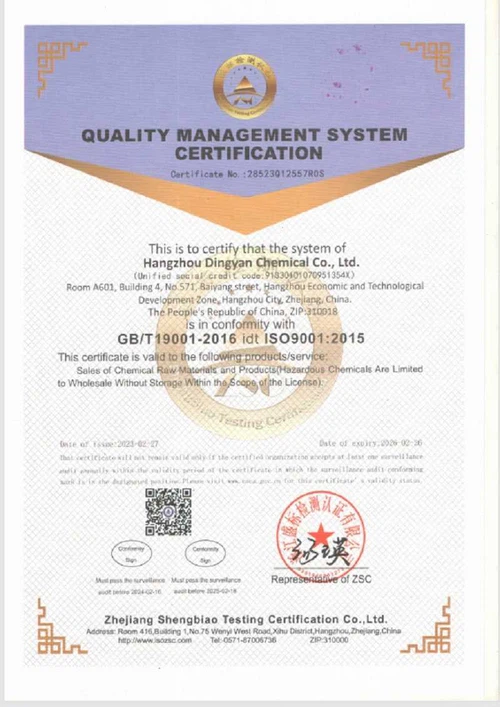
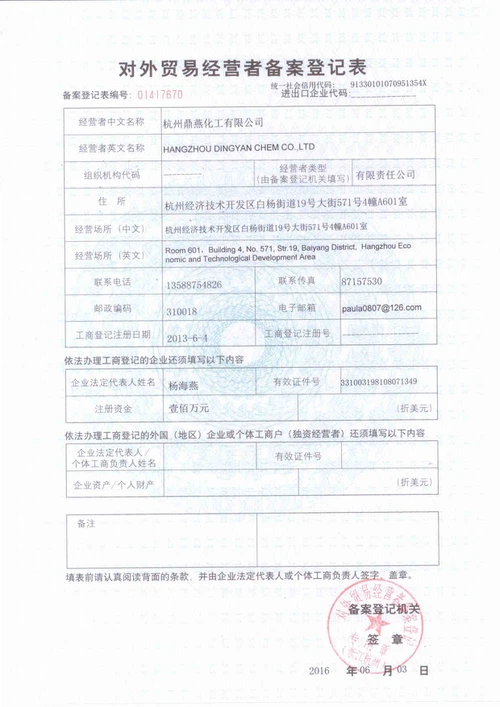
Our Certificates
FAQ
We're professional organic intermediate manufacturers and suppliers in China, specialized in providing high quality customized service. If you're going to wholesale discount pharmaceutical and chemical raw materials, welcome to get free sample from our factory.
carbocations and carbanions, 545-06-2, Trichloroacetonitrile online purchase