


Your Professional Intermediates Manufacturer!
Located in Xiasha Economic Development Park of Hangzhou city (capital of Zhejiang province in the southeast coastal region of China), Hangzhou Dingyan Chem Co.,Ltd is a modern private enterprise; The company was founded in 2013 and has more than ten years of experience in this industry. we are mainly engaged in the development, trade and independent import and export business of hi-tech products such as pharmaceutical materials (APIs), pharmaceutical intermediates, fine chemicals and biochemical reagents, etc.
-
![2-Aminopyridine CAS 504-29-0]() 2-Aminopyridine CAS 504-29-0Product Name: 2-AminopyridineCAS No.: 504-29-0Molecular Formula: C5H6N2Molecular Weight: 94.11Melting Point: 59 °CBoiling Point: 204-210 °C (lit.)Bulk Density: 600 kg/m³Density: 1.0308read more
2-Aminopyridine CAS 504-29-0Product Name: 2-AminopyridineCAS No.: 504-29-0Molecular Formula: C5H6N2Molecular Weight: 94.11Melting Point: 59 °CBoiling Point: 204-210 °C (lit.)Bulk Density: 600 kg/m³Density: 1.0308read more -
![1,2-Diaminocyclohexane CAS 694-83-7]() 1,2-Diaminocyclohexane CAS 694-83-7Product Name: 1,2-DiaminocyclohexaneCAS No.: 694-83-7Molecular Formula: C6H14N2Molecular Weight: 114.19Melting Point: 41-45 °CBoiling Point: 92-93 °C (18 mm Hg, lit.)Density: 0.931 g/mL at 25 °Cread more
1,2-Diaminocyclohexane CAS 694-83-7Product Name: 1,2-DiaminocyclohexaneCAS No.: 694-83-7Molecular Formula: C6H14N2Molecular Weight: 114.19Melting Point: 41-45 °CBoiling Point: 92-93 °C (18 mm Hg, lit.)Density: 0.931 g/mL at 25 °Cread more -
![3-Nitrobenzaldehyde CAS 99-61-6]() 3-Nitrobenzaldehyde CAS 99-61-6Product Name: 3-NitrobenzaldehydeCAS No.: 99-61-6Molecular Formula: C7H5NO3Molecular Weight: 151.12Melting Point: 56 °CBoiling Point: 285-290 °CDensity: 1.2792Vapor Density: 5.21 (vs air)Refractiveread more
3-Nitrobenzaldehyde CAS 99-61-6Product Name: 3-NitrobenzaldehydeCAS No.: 99-61-6Molecular Formula: C7H5NO3Molecular Weight: 151.12Melting Point: 56 °CBoiling Point: 285-290 °CDensity: 1.2792Vapor Density: 5.21 (vs air)Refractiveread more -
![Trifluoroacetic Acid CAS 76-05-1]() Trifluoroacetic Acid CAS 76-05-1Product Name: Trifluoroacetic acidCAS No.: 76-05-1Molecular Formula: C2HF3O2Molecular Weight: 114.02Melting Point: -15.4 °C (lit.)Boiling Point: 72.4 °C (lit.)Density: 1.489 g/mL at 20 °C (lit.)Vaporread more
Trifluoroacetic Acid CAS 76-05-1Product Name: Trifluoroacetic acidCAS No.: 76-05-1Molecular Formula: C2HF3O2Molecular Weight: 114.02Melting Point: -15.4 °C (lit.)Boiling Point: 72.4 °C (lit.)Density: 1.489 g/mL at 20 °C (lit.)Vaporread more -
![N,N-Diisopropylethylamine CAS 7087-68-5]() N,N-Diisopropylethylamine CAS 7087-68-5Product Name: N,N-DiisopropylethylamineCAS No.: 7087-68-5Molecular Formula: C8H19NMolecular Weight: 129.24Melting Point: Boiling Point: 127 °C (lit.)Density: 0.742 g/mL at 25 °C (lit.)Vapor Pressure:read more
N,N-Diisopropylethylamine CAS 7087-68-5Product Name: N,N-DiisopropylethylamineCAS No.: 7087-68-5Molecular Formula: C8H19NMolecular Weight: 129.24Melting Point: Boiling Point: 127 °C (lit.)Density: 0.742 g/mL at 25 °C (lit.)Vapor Pressure:read more -
![2-Methoxybenzaldehyde CAS 135-02-4]() 2-Methoxybenzaldehyde CAS 135-02-4Product Name: 2-Methoxybenzaldehyde CAS No.: 135-02-4Molecular Formula: C8H8O2Molecular Weight: 136.15Melting Point: 34-40 °C (lit.)Boiling Point: 238 °C (lit.)Density: 1.127 g/mL at 25 °Cread more
2-Methoxybenzaldehyde CAS 135-02-4Product Name: 2-Methoxybenzaldehyde CAS No.: 135-02-4Molecular Formula: C8H8O2Molecular Weight: 136.15Melting Point: 34-40 °C (lit.)Boiling Point: 238 °C (lit.)Density: 1.127 g/mL at 25 °Cread more -
![3,4-Dihydroxybenzaldehyde CAS 139-85-5]() 3,4-Dihydroxybenzaldehyde CAS 139-85-5Product Name: 3,4-DihydroxybenzaldehydeCAS No.: 139-85-5Molecular Formula: C7H6O3Molecular Weight: 138.12Melting Point: 150-157 °C (lit.)Boiling Point: 213.5 °C (rough estimate)Density: 1.2667 (roughread more
3,4-Dihydroxybenzaldehyde CAS 139-85-5Product Name: 3,4-DihydroxybenzaldehydeCAS No.: 139-85-5Molecular Formula: C7H6O3Molecular Weight: 138.12Melting Point: 150-157 °C (lit.)Boiling Point: 213.5 °C (rough estimate)Density: 1.2667 (roughread more -
![Phenylboronic Acid CAS 98-80-6]() Phenylboronic Acid CAS 98-80-6Product Name: Phenylboronic acidCAS No.: 98-80-6Molecular Formula: C6H7BO2Molecular Weight: 121.93Melting Point: 216-219 °C (lit.)Boiling Point: 265.9±23.0 °C (Predicted)Density: 1.13±0.1 g/cm3read more
Phenylboronic Acid CAS 98-80-6Product Name: Phenylboronic acidCAS No.: 98-80-6Molecular Formula: C6H7BO2Molecular Weight: 121.93Melting Point: 216-219 °C (lit.)Boiling Point: 265.9±23.0 °C (Predicted)Density: 1.13±0.1 g/cm3read more -
![4,4'-Bipyridine CAS 553-26-4]() 4,4'-Bipyridine CAS 553-26-4Product Name: 4,4'-BipyridineCAS No.: 553-26-4Molecular Formula: C10H8N2Molecular Weight: 156.18Melting Point: 109-112 °C (lit.)Boiling Point: 305 °C (lit.)Density: 1.2814 (rough estimate)Refractiveread more
4,4'-Bipyridine CAS 553-26-4Product Name: 4,4'-BipyridineCAS No.: 553-26-4Molecular Formula: C10H8N2Molecular Weight: 156.18Melting Point: 109-112 °C (lit.)Boiling Point: 305 °C (lit.)Density: 1.2814 (rough estimate)Refractiveread more -
![4-Hydroxypyridine CAS 626-64-2]() 4-Hydroxypyridine CAS 626-64-2Product Name: 4-HydroxypyridineCAS No.: 626-64-2Molecular Formula: C5H5NOMolecular Weight: 95.1Melting Point: 150-151 °C (lit.)Boiling Point: 230-235 °C/12 mmHg (lit.)Density: 1.1418 (roughread more
4-Hydroxypyridine CAS 626-64-2Product Name: 4-HydroxypyridineCAS No.: 626-64-2Molecular Formula: C5H5NOMolecular Weight: 95.1Melting Point: 150-151 °C (lit.)Boiling Point: 230-235 °C/12 mmHg (lit.)Density: 1.1418 (roughread more -
![4-Chlorobenzaldehyde CAS 104-88-1]() 4-Chlorobenzaldehyde CAS 104-88-1Product Name: 4-ChlorobenzaldehydeCAS No.: 104-88-1Molecular Formula: C7H5ClOMolecular Weight: 140.57Melting Point: 46 °CBoiling Point: 213-214 °CDensity: 1.196Vapor Density: 0.6 (vs air)Vaporread more
4-Chlorobenzaldehyde CAS 104-88-1Product Name: 4-ChlorobenzaldehydeCAS No.: 104-88-1Molecular Formula: C7H5ClOMolecular Weight: 140.57Melting Point: 46 °CBoiling Point: 213-214 °CDensity: 1.196Vapor Density: 0.6 (vs air)Vaporread more -
![2,4-Dichlorobenzaldehyde CAS 874-42-0]() 2,4-Dichlorobenzaldehyde CAS 874-42-0Product Name: 2,4-DichlorobenzaldehydeCAS No.: 874-42-0Molecular Formula: C7H4Cl2OMolecular Weight: 175.01Melting Point: 64-69 °C (lit.)Boiling Point: 233 °C (lit.)Bulk Density: 700 kg/m³Density:read more
2,4-Dichlorobenzaldehyde CAS 874-42-0Product Name: 2,4-DichlorobenzaldehydeCAS No.: 874-42-0Molecular Formula: C7H4Cl2OMolecular Weight: 175.01Melting Point: 64-69 °C (lit.)Boiling Point: 233 °C (lit.)Bulk Density: 700 kg/m³Density:read more


Why Choose Us
Rich Experience
The company was founded in 2013 and has more than ten years of experience in this industry.
High Quality
Our products are manufactured or executed to very high standards, using the finest materials and manufacturing processes.
Research And Development
Insisting on the development path of "scientific and technological innovation" since our foundation, dingyan-chemical has laid great stresses on the research and development of scientific and technological innovation.
Production Market
Dingyan's products are well sold in more than 60 countries and regions in North America, Western Europe, Southeast Asia, Central and South America, and then established long-term and steady relations of cooperation with many pharmaceutical enterprises in Europe, USA, Greece, Germany, South Korea and India, etc.
Types of Intermediates
The intermediates produced by our company mainly include the following types:
5-sulfosalicylic Acid 5965-83-3
5-Sulfosalicylic acid is referred to as Saal, C7H6O6S, CAS 5965-83-3, Purity degree: 99%+,Molecular weight: 254.21, EINECS:641-618-6 ,Melting point: 106~110℃.5-Sulfosalicylic acid is a sulfonated derivative of salicylic acid. It appears as a white to off-white, hygroscopic crystalline powder that turns pink upon exposure to iron and decomposes into sulfuric acid and salicylic acid at high temperatures. It is soluble in water and ethanol, as well as in ether.
|
Items |
Standard |
|
Appearance |
White or off white crystal |
|
Total acidity |
99%-105% |
|
Sulfate radical |
≤5.5% |
|
Water content |
≤22% |
|
Clarity |
Qualified |
2,5- Furandicarboxylic Acid 3238-40-2
2,5-Furandicarboxylic acid, referred to as FDCA, CAS:3238-40-2 , Molecular formula:C6H4O5,Molecular weight: 156.09,EINECS:221-800-8,Melting point >310°C (dec.) 2,5-Furandicarboxylic acid is a furan derivative that was first synthesized by Fittig and Heinzelmann in 1876. This organic compound is an important chemical intermediate, known for its high reactivity and good stability. It is soluble in water under alkaline conditions and exists as a white, powdery solid under acidic conditions. It is commonly used in the production of corrosion-resistant plastics. The compound may cause irritation to the eyes, respiratory tract, and skin.
|
Item |
Specification |
|
Assay |
Not less than 99.5% |
|
Appearance |
White powder |
|
Pyridine solubility |
Completely dissolved transparent |
|
Water (%) |
≤0.5% |
Advantages of Intermediates

Protein Precipitation and Analysis
5-Sulfosalicylic acid is used to precipitate proteins in urine, allowing for the determination of urine protein content. It also helps fix and stabilize proteins during electrophoresis, crucial for accurate protein analysis in various biological studies.
Metal Detection and Scavenging
5-Sulfosalicylic acid is an effective metal chelating agent, forming complexes with metal ions, which aids in their detection and quantification.
Organic Synthesis
It's used as a reagent and acid catalyst in various chemical reactions, facilitating the formation of different organic compounds. It's also used in the synthesis of composite materials and for controlling the size and dispersion of nanoparticles.
Other Advantages
It can act as a pH buffering agent, indicator, and antioxidant in various applications.
It's used in HPLC analysis for detecting short-chain coenzyme A esters in tissue samples.
It's used in the synthesis of polyaniline/5-sulfosalicylic acid composite and for transfer hydrogenation of biomass-derived furfural.
Advantages of 2,5- Furandicarboxylic Acid 3238-40-2
Excellent Chemical Resistance
FDCA-based materials have excellent chemical resistance, especially for applications that are frequently exposed to harsh chemicals, solvents or cleaning agents. For example, packaging used in the pharmaceutical, chemical and cosmetic industries requires high chemical resistance to ensure product safety and quality. The addition of FDCA to these materials provides an extra layer of protection against chemical degradation, ensuring longer-lasting, more reliable performance in such environments.
Enhanced Thermal Stability
FDCA-derived polymers have superior thermal stability compared to traditional plastic materials. This property is critical for applications that involve high-temperature processing or are exposed to high temperatures during the service life, such as food packaging that requires sterilization or high-temperature cooking. FDCA-based materials maintain their physical properties even at high temperatures, reducing the risk of deformation, warping or degradation.
Improved Mechanical Properties
A key benefit of FDCA in high-barrier films and coatings is its enhanced mechanical properties, such as tensile strength, flexibility and durability. These materials are more resistant to tearing, puncture and deformation under pressure. This makes them ideal for packaging and coatings that need to withstand handling, transportation and storage conditions without losing integrity. Improved mechanical properties also contribute to longer service life, reducing the likelihood of packaging failure and the need for frequent replacement. This not only benefits manufacturers, but also provides consumers with more durable, reliable products.
Biodegradability and End-of-Life Management
FDCA-based polymers have the potential to biodegrade, which is a significant advantage over traditional plastics, which take hundreds of years to decompose. Biodegradable FDCA-derived materials break down more easily in the natural environment, thereby reducing the long-term accumulation of waste and the burden on landfills. This makes them ideal for industries that want to reduce their environmental impact and promote sustainable waste management practices.
Application of Intermediates
Application of 5-sulfosalicylic Acid 5965-83-3
Medical and Clinical Laboratories: Protein Precipitation: 5-Sulfosalicylic acid is widely used in medical and clinical laboratories as a protein precipitant. It is added to biological samples, such as urine and serum, to precipitate proteins, facilitating the measurement of substances like proteins, enzymes, and creatinine.
Pharmaceutical Industry: Pharmaceutical Analysis: 5-Sulfosalicylic acid plays a vital role in pharmaceutical analysis for the quantitative determination of drugs and pharmaceutical compounds. It is utilized as a reagent in various analytical methods.
Chemical Industry: Chemical Reagent: It serves as a versatile reagent in chemical synthesis and analysis, making it valuable for a wide range of chemical reactions and laboratory processes.
Water Treatment: Coagulation and Flocculation: 5-Sulfosalicylic acid is occasionally used in water treatment processes as a coagulant or flocculant to help remove suspended solids and impurities from water sources.
Food and Beverage Industry: Analytical Chemistry: In food and beverage laboratories, 5-sulfosalicylic acid is employed for the analysis of various components, such as proteins and other organic compounds, in food and beverage samples.
Environmental Testing: Environmental Analysis: 5-Sulfosalicylic acid is used in environmental laboratories to analyze samples for pollutants and contaminants in soil, water, and air.
Research and Academia: Chemical Research: It finds applications in various research experiments and academic studies, particularly in analytical chemistry and biochemistry.
Textile Industry: Dye Removal: It may be used for removing excess dyes and pigments from textile wastewater during the effluent treatment process.
Agriculture: Soil Testing: In agriculture, 5-sulfosalicylic acid may be used for soil testing and nutrient analysis to assess soil health and fertility.
Clinical Diagnostics: Clinical Chemistry: 5-Sulfosalicylic acid is a fundamental component in clinical chemistry for the determination of substances like proteins, creatinine, and uric acid in diagnostic tests.
Cosmetics and Personal Care Products: Cosmetic Formulations: In rare cases, 5-sulfosalicylic acid may be used as a cosmetic ingredient, primarily in skincare and haircare products.
Chemical Analysis: Analytical Techniques: It is employed in various analytical techniques, including spectrophotometry and colorimetry, for the quantification of specific substances.
Metal Processing: Metal Precipitation: 5-Sulfosalicylic acid can be used for selective precipitation and removal of specific metals from solution in certain metal-processing applications.
Water Quality Control: Laboratory Water Analysis: Laboratories conducting water quality analysis for industrial and environmental purposes use 5-sulfosalicylic acid for various analyses.
Application of 2,5- Furandicarboxylic Acid 3238-40-2


Biobased Polymers and Plastics
The most prominent application of 2,5-furandicarboxylic acid is in the production of polyethylene furandicarboxylate (PEF). Normally, PEF is a renewable and high-performance biopolymer. Mostly, it's a sustainable alternative to polyethylene. This is because PEF possesses superior barrier properties, tensile strength, and thermal resistance. Therefore, this makes it ideal for packaging applications.
Sustainable Chemicals
2,5-furandicarboxylic acid is synthesized from renewable resources. This makes it a vital component in the drive towards more sustainable chemical production. Often, it is associated with a lower carbon footprint than those derived from fossil fuels. Consequently, this contributes to a circular economy in the chemical industry. Additionally, it promotes resource efficiency.
Agricultural and Horticultural Applications
The potassium salt of 2,5-furandicarboxylic acid is commonly used as a potassium-rich fertilizer in agriculture. Usually, potassium is an essential nutrient for plant growth. Often, it promotes root development, enhances water regulation, and increases crop resistance to diseases. In addition, this potassium salt is derived from 2,5-furandicarboxylic acid. Therefore, it represents a more sustainable option compared to traditional potassium fertilizers sourced from mining.
Biodegradable Plastics
2,5-furandicarboxylic acid is integrated with other biopolymers. This creates a new kind of biodegradable plastic. Normally, these plastics offer a significant reduction in plastic pollution. In addition, they provide a short life span in landfills. Ideally, this application is closely monitored in industries where packaging and single-use plastics are predominant. In this case, the role of 2,5-furandicarboxylic acid is as a biobased substitute for petroleum-derived chemicals.
Textile Industry
Often, 2,5-furandicarboxylic acid-based polymers are used in the textile industry. This is mostly due to their durability and moisture-wicking properties. Additionally, people refer to these polymers as high-performance fabrics. Generally, they are utilized in sportswear and outdoor gear. Customarily, the appeal of these textiles comes from their sustainability. Also, it is due to their bio-based origins.
Storage and transportation


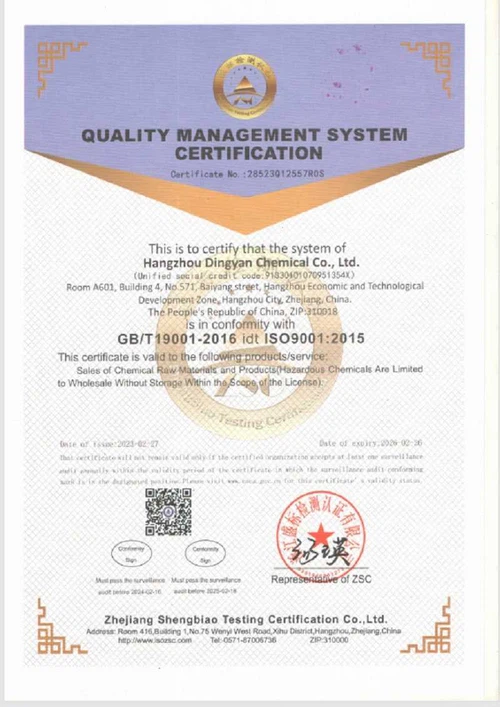
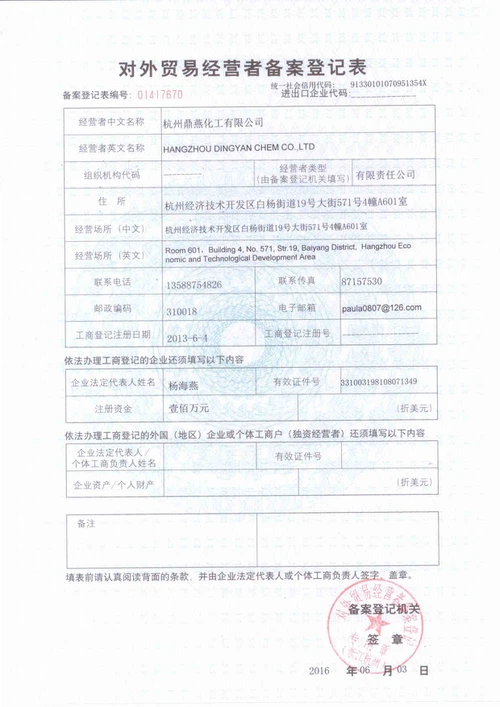
Our Certificates
FAQ
We're professional intermediates manufacturers and suppliers in China, specialized in providing high quality customized service. If you're going to wholesale discount pharmaceutical and chemical raw materials, welcome to get free sample from our factory.