


Your Professional Inorganic Compounds Manufacturer!
Located in Xiasha Economic Development Park of Hangzhou city (capital of Zhejiang province in the southeast coastal region of China), Hangzhou Dingyan Chem Co.,Ltd is a modern private enterprise; The company was founded in 2013 and has more than ten years of experience in this industry. we are mainly engaged in the development, trade and independent import and export business of hi-tech products such as pharmaceutical materials (APIs), pharmaceutical intermediates, fine chemicals and biochemical reagents, etc.
-
![Lithium Tetraborate12007-60-2]() Lithium Tetraborate12007-60-2Appearance:White powder. Li2B4O7:99.99%min. Al:0.0005% max. As:0.0001% maxread more
Lithium Tetraborate12007-60-2Appearance:White powder. Li2B4O7:99.99%min. Al:0.0005% max. As:0.0001% maxread more -
![Palladium Hydroxide 12135-22-7]() Palladium Hydroxide 12135-22-7Appearance:Dark-brown to black crystalline powder. Assay/Pb:≥75%. Melting Point:297-298ºC. Solubility:Soluble in acetic, insoluble in waterread more
Palladium Hydroxide 12135-22-7Appearance:Dark-brown to black crystalline powder. Assay/Pb:≥75%. Melting Point:297-298ºC. Solubility:Soluble in acetic, insoluble in waterread more -
![Chrome Sulphate 39380-78-4]() Chrome Sulphate 39380-78-4Appearance:purple powderCAS:39380-78-4Molecular weight: 343.20772read more
Chrome Sulphate 39380-78-4Appearance:purple powderCAS:39380-78-4Molecular weight: 343.20772read more -
![Sodium Azide 26628-22-8]() Sodium Azide 26628-22-8Sodium azide, chemical formula NaN3, is an inorganic compound, white hexagonal crystal, tasteless, odorless, non-hygroscopic, highly toxic, insoluble in ether, slightly soluble in ethanol, soluble inread more
Sodium Azide 26628-22-8Sodium azide, chemical formula NaN3, is an inorganic compound, white hexagonal crystal, tasteless, odorless, non-hygroscopic, highly toxic, insoluble in ether, slightly soluble in ethanol, soluble inread more -
![Sodium Perchlorate Monohydrate 7791-07-3]() Sodium Perchlorate Monohydrate 7791-07-3Appearance: White to slightly yellow,OdorlessCAS: 7791-07-3Solubility:Soluble in waterMelting point 130 ℃Molecular formula: NaClO4·H2Oread more
Sodium Perchlorate Monohydrate 7791-07-3Appearance: White to slightly yellow,OdorlessCAS: 7791-07-3Solubility:Soluble in waterMelting point 130 ℃Molecular formula: NaClO4·H2Oread more -
![Potassium Persulfate 7727-21-1]() Potassium Persulfate 7727-21-1Appearance:White crystalline powder. Purity≥99.0%min. Free acid:0.10%max. Iron:0.001%maxread more
Potassium Persulfate 7727-21-1Appearance:White crystalline powder. Purity≥99.0%min. Free acid:0.10%max. Iron:0.001%maxread more -
![Cesium Carbonate 534-17-8]() Cesium Carbonate 534-17-8Appearance:white powderCs2CO3 ≥99.9%. Li ≤5ppm. Na ≤50ppm. K ≤50ppmread more
Cesium Carbonate 534-17-8Appearance:white powderCs2CO3 ≥99.9%. Li ≤5ppm. Na ≤50ppm. K ≤50ppmread more


Why Choose Us
Rich Experience
The company was founded in 2013 and has more than ten years of experience in this industry.
High Quality
Our products are manufactured or executed to very high standards, using the finest materials and manufacturing processes.
Research And Development
Insisting on the development path of "scientific and technological innovation" since our foundation, dingyan-chemical has laid great stresses on the research and development of scientific and technological innovation.
Production Market
Dingyan's products are well sold in more than 60 countries and regions in North America, Western Europe, Southeast Asia, Central and South America, and then established long-term and steady relations of cooperation with many pharmaceutical enterprises in Europe, USA, Greece, Germany, South Korea and India, etc.
Advantages of Inorganic Compounds

Stability
Inorganic compounds often exhibit more excellent stability and resistance to degradation, making them suitable for applications requiring durability. Unlike organic compounds, which can be prone to oxidation, hydrolysis, and microbial degradation, many inorganic compounds are inert. They remain chemically stable even under harsh conditions.

High Purity
Many inorganic compounds can be synthesised with high purity, ensuring consistency in industrial processes. Inorganic synthesis techniques involve chemical vapour deposition, sol-gel processing, and precipitation reactions. They provide precise control over composition, morphology, and crystal structure. Silicon wafers, ceramics, and semiconductor materials are high-purity inorganic compounds. These are essential for semiconductor manufacturing, optical coatings, and catalyst production.

Wide Range of Applications
Inorganic compounds are found in various industries, including electronics, construction, and pharmaceuticals. They have diverse properties, such as electrical conductivity, thermal stability, and mechanical strength. These characteristics make them indispensable for advanced technologies and materials.
Specifications
|
Items |
Standard |
|
Appearance |
Dark-brown to black crystalline powder |
|
Assay/Pb |
≥75% |
|
Melting Point |
297-298ºC |
|
Solubility |
Soluble in acetic, insoluble in water |
|
Purity |
99% |
Application of Inorganic Compounds
Chemistry: Inorganic compounds are used as a raw material in the production of a wide variety of products, such as fertilizers, pharmaceuticals, and cleaning products. They are also used to manufacture other raw materials; for example, sodium chloride is used in the production of chlorine and lye, which are raw materials for manufacturing plastics, paper, and cleaning products.
Electronics: Inorganic semiconductors, such as silicon, are used in the production of chips and integrated circuits. Metal oxide compounds, such as zinc oxide, are used in liquid crystal displays and light-emitting diodes (LEDs).
Energy: Inorganic compounds play an important role in energy generation and storage. They are used in rechargeable batteries like lithium batteries and in fuel cells as catalysts to facilitate the hydrogen oxidation reaction.
Medicine and pharmacy: Inorganic compounds are used in various treatments and diagnostic studies; for example, platinum compounds are used in chemotherapy; iodine compounds are contrast agents for medical imaging (such as computed tomography and magnetic resonance imaging); and iron compounds are used as nutritional supplements.
Catalysts: Inorganic compounds are used in the production of petrochemicals, pharmaceutical synthesis, the production of plastics, and purifying exhaust gases in the automotive industry because they act as catalysts in various chemical reactions.
Glass and ceramics industry: Thanks to their high thermal stability, inorganic compounds — such as silicon dioxide or aluminum and titanium oxides — are widely used in manufacturing glasses and ceramics, both for domestic uses and for construction and engineering.
Textile industry: Inorganic compounds are used as pigments and dyes in textile processes, but also for manufacturing paints and inks.
Types of Inorganic Compounds

Metallic Compounds: These are primarily composed of metallic elements and are characterized by their metallic bonding. Common properties include high electrical conductivity, malleability, and luster. Examples include copper sulfate (CuSO₄) and iron(III) oxide (Fe₂O₃).
Non-metallic Compounds: Unlike metallic compounds, these substances do not exhibit metallic properties. They can include molecular compounds like water (H₂O) and gases such as nitrogen (N₂). Non-metallic compounds often play significant roles in biological systems and ecological processes.
Coordination Compounds: These are formed when metal ions bond with surrounding molecules or ions, known as ligands. The central metal atom typically coordinates with multiple ligands, leading to unique geometric arrangements.
Salts and Ionic Compounds: Properties of salts include their formation through the neutralization of acids and bases. Salts such as sodium chloride (NaCl) are prevalent in nature and are vital for various biological functions. Ionic compounds, characterized by strong electrostatic forces between ions, often exhibit high melting and boiling points.
Oxides and Hydroxides: Comprising oxygen and hydrogen combined with metals or non-metals, these compounds display unique reactivity. Oxides can act as either acids or bases depending on their molecular structure. For instance, calcium oxide (CaO) is a basic oxide, while carbon dioxide (CO₂) serves as an acidic oxide when dissolved in water, forming carbonic acid.
Storage and transportation


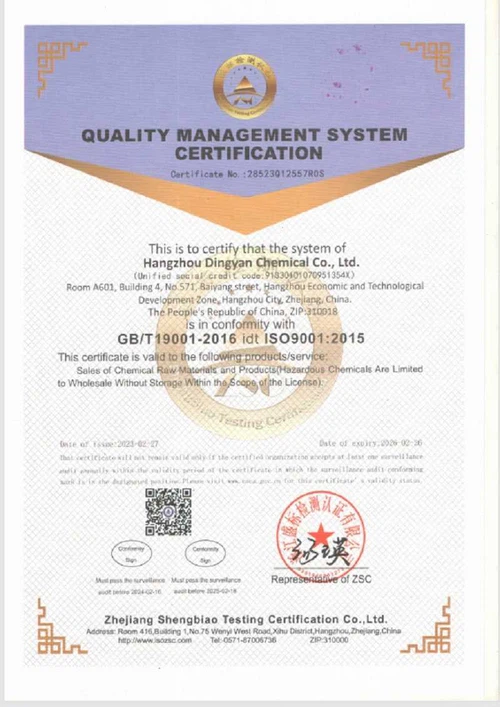
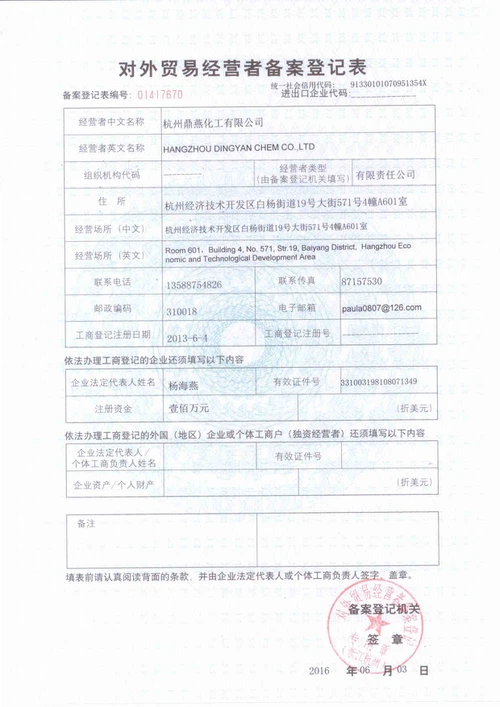
Our Certificates
FAQ
We're professional inorganic compounds manufacturers and suppliers in China, specialized in providing high quality customized service. If you're going to wholesale discount pharmaceutical and chemical raw materials, welcome to get free sample from our factory.
inorganic binders, inorganic tungstates, 26628-22-8