


Your Professional Food Additives Manufacturer!
Located in Xiasha Economic Development Park of Hangzhou city (capital of Zhejiang province in the southeast coastal region of China), Hangzhou Dingyan Chem Co.,Ltd is a modern private enterprise; The company was founded in 2013 and has more than ten years of experience in this industry. we are mainly engaged in the development, trade and independent import and export business of hi-tech products such as pharmaceutical materials (APIs), pharmaceutical intermediates, fine chemicals and biochemical reagents, etc.
-
![Linoleic Acid CAS 60-33-3]() Linoleic Acid CAS 60-33-3Product Name: Linoleic acidCAS No.: 60-33-3Molecular Formula: C18H32O2Molecular Weight: 280.45Melting Point: -5 °C (lit.)Boiling Point: 229-230 °C/16 mmHg (lit.)Density: 0.902 g/mL at 25 °Cread more
Linoleic Acid CAS 60-33-3Product Name: Linoleic acidCAS No.: 60-33-3Molecular Formula: C18H32O2Molecular Weight: 280.45Melting Point: -5 °C (lit.)Boiling Point: 229-230 °C/16 mmHg (lit.)Density: 0.902 g/mL at 25 °Cread more -
![Choline Bitartrate CAS 87-67-2]() Choline Bitartrate CAS 87-67-2Product Name: Choline bitartrateCAS No.: 87-67-2Molecular Formula: C9H19NO7Molecular Weight: 253.25Melting Point: 151-153°CSpecific Rotation: [α]D20 +15~+18° (c=4, H2O)Boiling Point: 399.3 °CDensity:read more
Choline Bitartrate CAS 87-67-2Product Name: Choline bitartrateCAS No.: 87-67-2Molecular Formula: C9H19NO7Molecular Weight: 253.25Melting Point: 151-153°CSpecific Rotation: [α]D20 +15~+18° (c=4, H2O)Boiling Point: 399.3 °CDensity:read more -
![L-Arabinose CAS 5328-37-0]() L-Arabinose CAS 5328-37-0Product Name: L-ArabinoseCAS No.: 5328-37-0Molecular Formula: C5H10O5Molecular Weight: 150.13Melting Point: 160-163 °C (lit.)Specific Rotation: 104 °C (C=6, IN WATER 23 °C)Boiling Point: 415.5±38.0read more
L-Arabinose CAS 5328-37-0Product Name: L-ArabinoseCAS No.: 5328-37-0Molecular Formula: C5H10O5Molecular Weight: 150.13Melting Point: 160-163 °C (lit.)Specific Rotation: 104 °C (C=6, IN WATER 23 °C)Boiling Point: 415.5±38.0read more -
![Phenethyl Alcohol CAS 60-12-8]() Phenethyl Alcohol CAS 60-12-8Product Name: Phenethyl alcoholCAS No.: 60-12-8Molecular Formula: C8H10OMolecular Weight: 122.16Melting Point: -27 °C (lit.)Boiling Point: 219-221 °C/750 mmHg (lit.)Density: 1.020 g/mL at 20 °Cread more
Phenethyl Alcohol CAS 60-12-8Product Name: Phenethyl alcoholCAS No.: 60-12-8Molecular Formula: C8H10OMolecular Weight: 122.16Melting Point: -27 °C (lit.)Boiling Point: 219-221 °C/750 mmHg (lit.)Density: 1.020 g/mL at 20 °Cread more -
![Sodium Methylparaben CAS 5026-62-0]() Sodium Methylparaben CAS 5026-62-0Product Name: Sodium methylparabenCAS No.: 5026-62-0Molecular Formula: C8H9NaO3Molecular Weight: 176.15Melting Point: >125°CDensity: 1.42 g/cm3 (20°C)Solubility: Freely soluble in water, sparinglyread more
Sodium Methylparaben CAS 5026-62-0Product Name: Sodium methylparabenCAS No.: 5026-62-0Molecular Formula: C8H9NaO3Molecular Weight: 176.15Melting Point: >125°CDensity: 1.42 g/cm3 (20°C)Solubility: Freely soluble in water, sparinglyread more -
![Sorbic Acid 110-44-1]() Sorbic Acid 110-44-1Transmittance:≥97%. Clarify:Passes test. Assay (dry weight basis):≥99%(on the anhydrous basis). Sublimation point:80℃. Melting range:132-135 ℃read more
Sorbic Acid 110-44-1Transmittance:≥97%. Clarify:Passes test. Assay (dry weight basis):≥99%(on the anhydrous basis). Sublimation point:80℃. Melting range:132-135 ℃read more -
![L-histidine 71-00-1]() L-histidine 71-00-1Appearance:White crystals or crystalline powder. Assay:98.5%-101.5%. Residue on ignition:≤0.4%. Chloride (CI):≤0.05%read more
L-histidine 71-00-1Appearance:White crystals or crystalline powder. Assay:98.5%-101.5%. Residue on ignition:≤0.4%. Chloride (CI):≤0.05%read more -
![Citric Acid Monohydrate 5949-29-1]() Citric Acid Monohydrate 5949-29-1Description:White Crystalline Powder, Colorless Crystals or Granules. Identification:Pass test. Appearance of Solution:Pass test. Assay:99.5~100.5%read more
Citric Acid Monohydrate 5949-29-1Description:White Crystalline Powder, Colorless Crystals or Granules. Identification:Pass test. Appearance of Solution:Pass test. Assay:99.5~100.5%read more -
![Saccharin Sodium 6155-57-3]() Saccharin Sodium 6155-57-3Melting point:226-230°CAppearance:White crystal. Content :99.0-101.0 %read more
Saccharin Sodium 6155-57-3Melting point:226-230°CAppearance:White crystal. Content :99.0-101.0 %read more -
![D-arabinose 10323-20-3]() D-arabinose 10323-20-3Appearance:White or almost whitepowderMelting point:155-160℃. Specific optical rotation:-101°-105°. Loss on Drying:1%Max. Residue on ignition:0.2%Maxread more
D-arabinose 10323-20-3Appearance:White or almost whitepowderMelting point:155-160℃. Specific optical rotation:-101°-105°. Loss on Drying:1%Max. Residue on ignition:0.2%Maxread more -
![D-(+)-maltose Monohydrate 6363-53-7]() D-(+)-maltose Monohydrate 6363-53-7Test Specifications. Appearance Viscous, slightly transparent liquid. Identification Positive. pH 4.5-6.5. Sulfated Ash 0.1% Maxread more
D-(+)-maltose Monohydrate 6363-53-7Test Specifications. Appearance Viscous, slightly transparent liquid. Identification Positive. pH 4.5-6.5. Sulfated Ash 0.1% Maxread more -
![Lauric Acid 143-07-7]()


Why Choose Us
Rich Experience
The company was founded in 2013 and has more than ten years of experience in this industry.
High Quality
Our products are manufactured or executed to very high standards, using the finest materials and manufacturing processes.
Research And Development
Insisting on the development path of "scientific and technological innovation" since our foundation, dingyan-chemical has laid great stresses on the research and development of scientific and technological innovation.
Production Market
Dingyan's products are well sold in more than 60 countries and regions in North America, Western Europe, Southeast Asia, Central and South America, and then established long-term and steady relations of cooperation with many pharmaceutical enterprises in Europe, USA, Greece, Germany, South Korea and India, etc.
Advantages of Food Additives
Additives Enhance Food's Nutritive Value
There are different types of food additives that help in the improvement or maintenance of food's nutritive value. Food additives may be broadly classified as nutritional or non-nutritional. The nutritional additives improve the nutritive value, or the value of food for growth, or for maintaining life, or for promoting the health and vigor of humans and animals, and also increase their usefulness in the production of food and feedstuffs.
They Make Food Last Longer
Food additives are basically a requirement when it comes to keeping food safe and healthy for consumption for a long time and making sure that it tastes fresh and delicious. Food is nothing but the most basic necessity for every living creature. Having safe food that is unsullied and does not fail to serve its purpose is something we all expect. This is where food additives and preservatives come into the picture.
Enhance the Taste and Aroma of Food
Food additives are primarily used to enhance the taste and aroma of food, preserve it, extend its shelf life, and add color to it. These additives are either artificial or natural and are essentially added to the food to improve or enhance its taste, texture, or, sometimes, appearance.
Food Additives May Help Lose Weight
Food additives are also known as food enhancers. They are used to improve or modify the taste or texture of a food. Some of the food additives are also helpful in losing weight. These additives help to burn the extra fat in the body like nothing else. The food additives that are helpful in losing weight do not have extra calories and are claimed to act as fat blockers.

Application of Food Additives
Beverage Sector
The popularity of fortified and plant-based beverages has also increased the use of food additives such as plant-based emulsifiers and colorants.
Meat and Meat Products Sector
The meat and meat products sector utilizes additives to preserve, enhance flavor, and improve the texture of processed meats.
Condiment Industry
The soup, sauce and condiment industry uses a variety of additives to maintain consistency, extend shelf life and improve taste.
Baking and Confectionery Industry
Food additives play a vital role in baked products, and their absence can lead to dry, stale, hard, and tasteless baked products. In addition, ingredients such as food emulsifiers are widely used in bread, biscuits, and cakes because they enhance proteins, complex starches, and aerate them.
Dairy and Dessert Sector
Food additives such as food emulsifiers, food preservatives, food sweeteners, food enzymes, and hydrocolloids are widely used in dairy products and desserts. Hydrocolloids play a stabilizing and thickening role in fermented milk, milk beverages, dairy desserts, cream, and ice cream. In addition, milk beverages and cheese products rely heavily on food emulsifiers to promote emulsion formation and stabilization.
Specifications
|
Items |
Standard |
|
Appearance |
White to off-white crystalline powder or granular |
|
Odor |
Slight characteristic odor |
|
Identification test |
Test of double bonds: Passes test UV: Conforms with standard spectrum |
|
Transmittance |
≥97% |
|
Clarify |
Passes test |
|
Assay (dry weight basis) |
≥99%(on the anhydrous basis) |
|
Sublimation point |
80℃ |
|
Melting range |
132-135 ℃ |
|
Water (karl fischer) |
≤0.5% |
|
Residue on ignition |
≤0.2% |
|
Aldehyde (as formaldehyde) |
≤0.1% |
|
Arsenic (as AS) |
≤2mg/kg |
|
Lead |
≤2mg/kg |
|
Mercury |
≤1mg/kg |
|
Heavy metals (as Pb) |
≤10mg/kg |
Types of Food Additives
Preservatives: These additives help prolong the shelf life of food products by inhibiting the growth of microorganisms, such as bacteria, yeasts, and molds. Some common preservatives include sodium benzoate, potassium sorbate, and propionic acid.
Sweeteners: Sweeteners boost the taste and flavor of food products by adding sweetness. These can be either nutritive, like sugar, honey, or corn syrup, or non-nutritive, such as aspartame, saccharin, or stevia.
Coloring Agents: These additives give food products a distinct, appealing appearance by adding or enhancing color. Some coloring agents are naturally derived from fruits, vegetables, or spices, while others are synthetically produced. Examples include beet juice, annatto, caramel, and tartrazine.
Emulsifiers, Stabilizers, and Thickeners: These additives help maintain consistent textures in food products by preventing clumping or separation. Common examples include guar gum, xanthan gum, and carrageenan.
Acidity Regulators: These additives control the pH level in food products, ensuring the correct acidity or alkalinity for preservation, flavor enhancement, or texture improvement. Citric acid, malic acid, and sodium bicarbonate are some examples.
Flavor Enhancers: These additives build up or intensify the existing flavors in food products without contributing a separate taste themselves. Some well-known flavor enhancers are monosodium glutamate (MSG) and disodium inosinate.
Storage and transportation
Storage conditions: 2-8°C,ventilation, dryness.


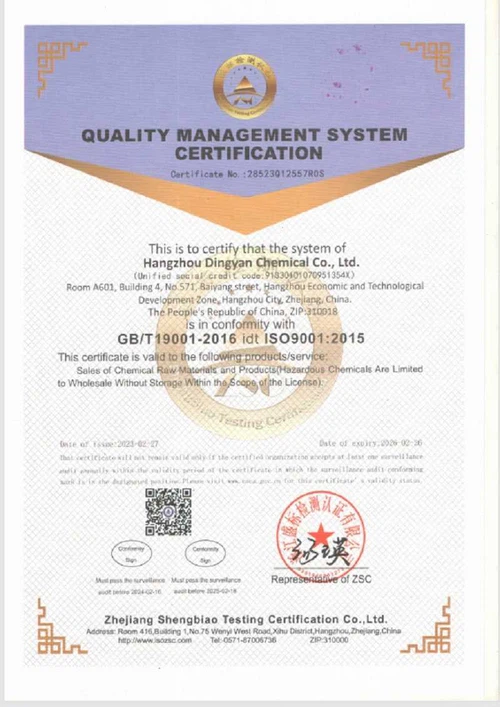
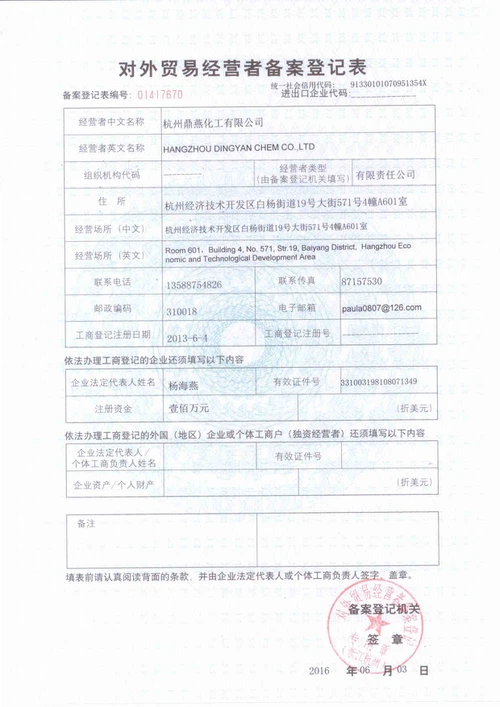
Our Certificates
FAQ
We're professional food additives manufacturers and suppliers in China, specialized in providing high quality customized service. If you're going to wholesale discount pharmaceutical and chemical raw materials, welcome to get free sample from our factory.
electrophoresis buffer, d mannitol uses d mannitol Sweetener