


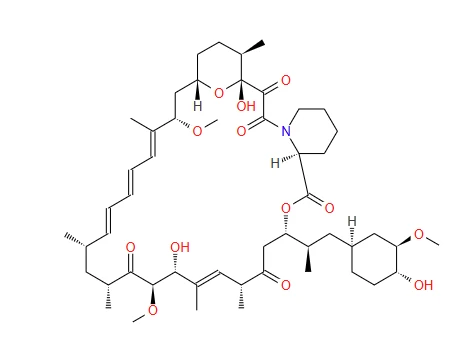
Sirolimus 53123-88-9, also known as rapamycin, is a macrolide compound produced by the metabolism of the actinomycete Streptomyces hygroscopicus. It is a white to off-white crystalline powder, with a melting point between 183–185°C. Molecular formula C₅₁H₇₉NO₁₃, molecular weight 914.17.
Advantage
High purity
Our product is purified by high-performance liquid chromatography, and the main peak content is controlled between 98% and 102%, with individual impurities ≤0.15%, and total impurities ≤2.0%. , meeting the requirements of pharmacology and formulation research, and development.
Precise targeting mechanism
Sirolimus 53123-88-9 precisely inhibits mTORC1 activity with an IC₅₀ of about 0.1 nM, blocking T-cell proliferation and protein synthesis pathways. It has shown high efficiency and low toxicity in multiple cell lines and animal models, and has a clear molecular target basis.
Strong adaptability
Sirolimus's macrolide structure and multiple hydroxyl substitution groups make it well-compatible with a variety of organic solvents. Its solubility in methanol is as high as 200 mg/mL, and it also has good solubility in solvents such as ethanol, chloroform, and acetone, making it easy to prepare a variety of experimental dosage forms.
Application
- Immunosuppressive therapy: used after organ transplantation to prevent rejection, as a substitute or combination with cyclosporine A.
- Targeted anticancer research: widely used in the study of malignant tumors related to abnormal mTOR pathways, such as renal cancer, breast cancer, liver cancer, and neuroendocrine tumors.
- Intervention for rare diseases: used to treat lymphangioleiomyomatosis (LAM) and tuberous sclerosis complex (TSC).
- Cellular mechanism research: used as a classic mTOR inhibitor in the study of molecular mechanisms such as autophagy, protein synthesis, and cell cycle regulation.
- Drug delivery platform development: used as a model compound in the development and testing of new drug carrier systems such as liposomes and nanoparticles.
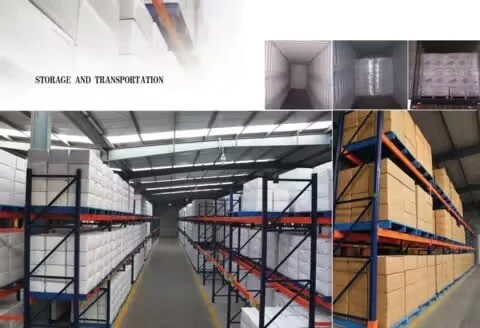
Storage and transportation
Sirolimus 53123-88-9 is recommended to be stored at -20°C in a dry, dark environment to maintain its activity and structural stability. Cold chain packaging is used during transportation to prevent product degradation under high temperatures or humidity fluctuations.

Quality Standard
|
Items |
Standard |
|
Appearance |
White to off-white crystalline powder |
|
Identification (IR) |
Conforms |
|
Identification (HPLC) |
Conforms |
|
Solubility |
Conforms |
|
Water |
≤1.0% |
|
Heavy metals |
≤20ppm |
|
Optical rotation |
-147°~-157° |
|
Residue on ignition |
≤0.15% |
|
Individual Impurity |
≤0.15% |
|
Total impurities |
≤2.0% |
|
Chromatographic purity |
Isomer A≤1.0% Isomer C≤5.0% RRT 0.86≤0.4% RRT 0.94≤0.15% RRT 1.06≤0.15% |
|
Residual solvents |
Methanol ≤0.3% Acetone ≤0.5% Dichlormethane ≤0.06% Trans-1,2-dichloroethane ≤0.0187% |
|
Assay(calculated isomer B&C of rapamycin on anhydrous basis |
98-102% |
Marketing
Our products are well-received in over 60 countries and regions, including North America, Western Europe, Southeast Asia, and Central and South America. We have built long-term, stable partnerships with pharmaceutical companies across Europe, the United States, Greece, Germany, Iran, Russia, South Korea, India, and other markets.


FAQ
Q: What is Sirolimus?
A: Sirolimus (53123-88-9) is a macrolide immunosuppressant originally extracted from the soil actinomycete Streptomyces hygroscopicus and is mainly used to prevent organ transplant rejection.
Q: What are the molecular formula and chemical characteristics of Sirolimus?
A: The molecular formula of Sirolimus is C51H79NO13, and the molecular weight is 914.17. It is a fat-soluble compound with a complex macrocyclic structure and multiple functional groups.
Q: How does Sirolimus exert its immunosuppressive effect?
A: It inhibits the mammalian target of the rapamycin (mTOR) signaling pathway, blocks T cell proliferation and activation, and thus inhibits the immune system response.
Q: What medical fields is Sirolimus mainly used for?
A: It is mainly used to prevent organ rejection after kidney transplantation and is also studied and used to treat certain types of cancer, autoimmune diseases, and angiogenesis.
Q: How is Sirolimus different from Tacrolimus?
A: Although both are immunosuppressants, Tacrolimus acts on the calcineurin pathway, while Sirolimus mainly targets the mTOR pathway. The two are often used in combination to reduce the toxicity of a single drug.
Q: What is the administration method of Sirolimus?
A: It is usually an oral preparation (such as tablets). Absorption is affected by food. It is recommended to take it on an empty stomach or at the same time every day to maintain a stable blood drug concentration.
Q: What are the common side effects of using Sirolimus?
A: It may include hyperlipidemia, oral ulcers, increased risk of infection, abnormal liver function, and delayed wound healing. Blood drug concentration and biochemical indicators need to be monitored regularly.
Q: How to store Sirolimus to ensure its stability?
A: It should be stored in a dry, light-proof environment with a temperature control of 15–30°C, avoiding moisture and high temperature to prevent degradation.
Q: Does Sirolimus have other potential uses that are not related to transplantation?
A: Yes, studies have found that it has potential in anti-cancer, anti-atherosclerosis, and anti-aging, and is being used in a variety of clinical trials and exploratory applications.
Q: Are there specific technical requirements for the production of Sirolimus?
A: Yes, the synthesis and purification process of Sirolimus requires efficient fermentation technology and multi-step separation and purification processes, which must be operated under GMP specifications to ensure its pharmaceutical-grade purity and safety.
Hot Tags: Sirolimus, China Sirolimus manufacturers, suppliers, 56-75-7, 147098-20-2, 136626-73-8, 50-81-7, 9012-76-4, 1405-10-3


